Camel Counted Cross Stitch Pattern
First Impressions: A Quietly Confident Design
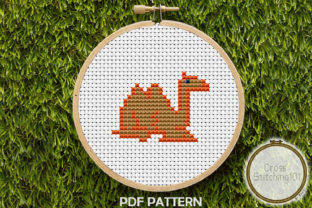
As a designer who’s stitched for boutique apparel drops from Brooklyn to Byron Bay, my first glance at the Camel Counted Cross Stitch Pattern landed with a soft, grounded weight—like sand slipping between fingers. It’s not flashy. It doesn’t shout. But it *holds space*. With just 25 stitches wide by 18 high on 14-count fabric, this is a design built for restraint and resonance. At under 1.8 inches wide, it reads as intentional—not minimal by accident, but minimal by craft. The use of only three DMC thread colors suggests thoughtful contrast and tonal harmony, ideal for translating cleanly across fabric textures without visual fatigue.
How It Lives on Sweatshirts: From Neutral Base to Seasonal Statement
This pattern thrives where many small-batch designs falter: on real-world sweatshirt fabrics. On heather grey or oatmeal fleece, the camel shape emerges with gentle warmth—neither cartoonish nor overly literal. On deep charcoal or navy hoodies, the stitch definition lifts beautifully against the darkness, especially with matte-finish floss. Pastel sweatshirts (think dusty rose or sage) let the camel read as quietly whimsical—feminine without being saccharine, rustic without leaning into cliché. And on oversized hoodies? It anchors the chest with subtle authority. No need for back placement or sleeve flourishes—the Camel Counted Cross Stitch Pattern works strongest as a quiet signature: left chest, centered just below the collarbone, where the eye rests naturally in lifestyle photography.
Design Personality: Minimal, Warm, and Unmistakably Handmade
This isn’t a bold graphic—it’s a tactile whisper. It leans into the handmade product ethos without sacrificing polish. It feels premium because it’s precise (25×18 is tight enough to avoid floppiness, generous enough to retain charm), yet casual enough for everyday wear. It’s not decorative clutter; it’s decorative *intention*. For a boutique brand building identity around slow craft and earth-toned storytelling, this pattern reinforces voice—not noise. It’s playful in its simplicity, not its execution; confident in its scale, not its volume.
Real-World Embroidery Considerations
Before stitching, I always ask: *Will this hold up commercially?* Here’s how the Camel Counted Cross Stitch Pattern measures up:
- Thread color contrast: With only three DMC colors—and no specified shades—I recommend testing contrast on your exact fabric swatch. Light camel on cream fleece? Possibly too low-contrast. Dark brown + ecru + warm tan on charcoal? Likely rich and legible. Always verify before bulk hooping.
- Stitch density & fabric thickness: At 25×18 on 14-count, this sits comfortably in the “light-to-medium” density range. It won’t overwhelm midweight French terry or loopback fleece—but it *will* benefit from medium-weight cutaway stabilizer underneath, especially for commercial embroidery runs. Skip tear-away on thicker sweatshirts; it won’t fully release and may distort fine cross stitches.
- Small-size readability: Yes—it’s legible. But only if digitized thoughtfully. As a counted cross stitch pattern (not a machine embroidery file), it assumes hand-stitching precision. If you’re converting to machine embroidery for production, factor in minimum stitch length and jump thread management—those tiny arms and humps need clean vector translation.
- Hoop placement & washing durability: Its compact footprint makes chest placement forgiving—even on curved seams or dropped shoulders. And because cross stitch relies on secure anchoring (not dense fill), it resists fraying through repeated washes when finished with proper back-tacking and quality floss.
Beyond the Stitch: Brand Impact & Customer Connection
For Etsy sellers and small shop owners, the Camel Counted Cross Stitch Pattern isn’t just decoration—it’s a trust signal. When customers see finely rendered cross stitch on a sweatshirt, they register *care*, *craft*, and *uniqueness*. That perception lifts perceived value instantly. It tells shoppers: “This wasn’t screen-printed en masse. It was chosen, counted, and stitched.” In an oversaturated apparel market, that distinction converts browsers into buyers.
It also strengthens visual recognition. Unlike generic logos or overused motifs, a well-placed camel in cross stitch becomes a quiet signature—repeated across seasonal drops, embroidered tote bags, or even matching crewnecks and beanies. That consistency builds brand identity without shouting. And because it’s rooted in traditional craft, it invites engagement: customers tag their makes, share close-ups of stitching texture, and comment on the “soothing rhythm” of the pattern—organic social proof no ad budget can buy.
Where This Pattern Fits Best
The Camel Counted Cross Stitch Pattern shines brightest in contexts where authenticity and subtlety are assets—not afterthoughts:
- Boutique merchandise: Paired with linen-blend tees or organic cotton hoodies, it elevates basic staples into curated pieces.
- Lifestyle product photography: Its compact size and organic shape photograph beautifully in flat lays and worn-in candid shots—ideal for Instagram carousels and printable mockups.
- Etsy listings: Use it as a hero detail in your title (“Hand-Stitched Camel Sweatshirt | Cross Stitch Patterns Inspired”) and highlight its handmade nature in descriptions to stand out among digital-only graphics.
- Custom apparel branding: Not as a primary logo—but as a secondary mark: on pocket flaps, inner neck labels, or sleeve cuffs for brands rooted in nature, travel, or mindful making.
A Final Note for Creative Entrepreneurs
The Camel Counted Cross Stitch Pattern delivers what many digital embroidery files miss: *breathing room*. It respects the fabric. It honors the stitcher’s time. And it gives your customer something tactile, memorable, and quietly meaningful. Just remember—this is a counted cross stitch pattern, not a ready-to-embroider machine file. You’ll need to adapt it thoughtfully for commercial embroidery, confirm hoop size compatibility, and test thread choices on your exact garment fabric. Those details aren’t limitations—they’re invitations to refine, personalize, and own the process. For small shops, that ownership is where true differentiation begins.