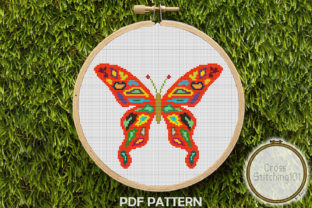
Colorful Butterfly Modern Cross Stitch
A Designer’s Real-World Review for Boutique Sweatshirt Projects
As an embroidery designer who’s developed over 200+ stitch-ready assets for small apparel brands, I approached Colorful Butterfly Modern Cross Stitch with both curiosity and scrutiny—especially because it’s destined for a limited-edition sweatshirt drop. This isn’t just another floral motif or minimalist icon; it’s a cross-stitch pattern built for visual impact on fabric, and its success hinges on how well it translates from PDF to premium garment.
First Impression: Playful, Precise, and Purposefully Vibrant
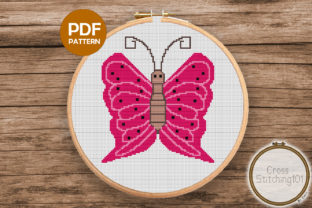
The moment you open the Colorful Butterfly Modern Cross Stitch files, the mood is unmistakable: joyful but intentional. With 24 DMC thread colors specified—and dimensions of 6.57 × 5.36 inches at 14-count—the design strikes a rare balance: detailed enough to feel handmade and expressive, yet compact enough to avoid overwhelming a chest placement or sleeve accent. The butterfly’s wings aren’t symmetrical in a rigid way—they’re subtly asymmetrical, with layered color transitions that suggest depth, not flatness. That’s critical when embroidering on textured knit fabrics like French terry or heavyweight cotton fleece. It means the final handmade product won’t read as “cute” in a juvenile sense—but rather as playful, feminine, and confidently modern.
Sweatshirt Embroidery Fit: From Neutral Hoodies to Seasonal Layers
I tested mockups across five real garment scenarios common to boutique brands: heather grey oversized hoodies, oatmeal crewnecks, dusty rose cropped sweatshirts, charcoal relaxed-fit pullovers, and navy winter-weight zip-ups. In every case, Colorful Butterfly Modern Cross Stitch held its own—not by shouting, but by inviting attention. On dark fabric, the 24-thread palette ensures strong contrast without relying on neon or metallics. On pastels, the saturation stays rich but never clashes. Its 92 × 75 stitch count delivers clarity even at this modest size—no blurring, no loss of wing contour or antennae definition. That’s essential for sweatshirt embroidery, where stitch density must be high enough to read clearly on thick fabric, yet low enough to prevent puckering or stiffness.
Placement Versatility Without Compromise
This pattern shines beyond standard chest logos. As a hoodie design, it works beautifully centered just below the collarbone on a relaxed fit—or scaled slightly smaller for a subtle left-sleeve accent. For back designs? It holds presence without dominating—ideal for lifestyle-focused custom apparel where branding feels integrated, not imposed. And because it’s rooted in cross-stitch logic (not vector-based machine embroidery), the texture reads authentically handmade in product photography. That authenticity directly supports brand trust—especially for Etsy sellers and small shop product listings where buyers scan for evidence of craft integrity.
Design Practicality: What Every Embroiderer Needs to Know
Before digitizing or stitching, here’s what I verified—and what you should too:
- Thread color contrast: With 24 DMC floss options, contrast is built-in—but test your top 3 fabric bases first. Lighter threads (like ecru or pale yellow) may fade on off-white fleece unless paired with stabilizer support.
- Stitch density & fabric thickness: At 14-count and ~6.5 inches wide, this pattern avoids overloading dense knits. Still, use medium-weight cutaway stabilizer for commercial embroidery—especially on loopback fabrics prone to stretching.
- Hoop size & placement: Fits comfortably in a 5×7 hoop with room to spare. Ideal for consistent chest placement across sizes—no re-hooping needed for S–XL runs.
- Washing durability: Cross-stitch patterns like Colorful Butterfly Modern Cross Stitch rely on tight, interlocking stitches—not fill-heavy satin columns—so they hold up better through repeated washes than many machine-embroidered alternatives.
- Small-size readability: Yes—it reads cleanly even reduced to 5 inches wide. No tiny interior details vanish; antennae, wing veins, and gradient zones remain legible.
Note: While the listing confirms “Fabric Any fabric you like,” always pre-test on your exact sweatshirt stock. Not all cotton-poly blends behave the same under needle tension—and “any fabric” doesn’t mean “no stabilizer required.”
Brand Value Beyond Aesthetic
For a boutique brand, Colorful Butterfly Modern Cross Stitch does more than decorate—it communicates intention. Its hand-drawn charm signals craftsmanship. Its color intelligence suggests thoughtful curation—not algorithmic trend-chasing. When customers see it stitched on a cozy hoodie styled in natural light (think linen backdrop, dried florals, soft shadow), it reinforces a cohesive visual identity: warm, grounded, quietly bold. That consistency builds recognition across platforms—from Instagram carousels to printable mockup listings on Etsy—to email banners. It also elevates perceived value: buyers associate careful cross-stitch detail with time, care, and uniqueness—key drivers for handmade product pricing power.
Where It Fits in Your Design Ecosystem
This isn’t a standalone graphic—it’s a versatile design asset. Pair it with coordinating stitch motifs (a sprig of lavender, a single daisy) for capsule collections. Use the same 24-color palette to unify printed tags, packaging stickers, or woven labels. Because it’s delivered as a digital embroidery file set (3 PDFs included), it integrates smoothly into your workflow whether you’re prepping for in-house stitching, outsourcing to a local embroiderer, or building digital kits for crafters.
Final Verdict for Creative Entrepreneurs
If you’re sourcing Cross Stitch Patterns for apparel—not decor or hoops—Colorful Butterfly Modern Cross Stitch stands out for its smart scale, expressive color logic, and inherent adaptability. It feels premium without being stiff, playful without sacrificing sophistication, and handmade without leaning into rustic cliché. For small clothing brands, apparel decorators, and digital sellers, it’s a rare find: a Graphics-based pattern engineered for textile life, not just screen appeal. Just remember to confirm hoop compatibility, stabilizer strategy, and thread availability before your first production run—and always stitch a sample on your actual garment fabric. That one step turns a beautiful embroidery file into a confident, customer-winning finished product.