Giraffe Eating Modern Cross Stitch
A Playful, Precise Pattern for Handmade & Commercial Projects
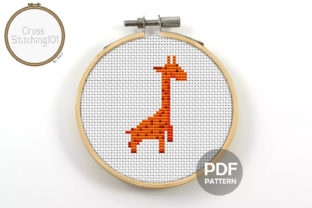
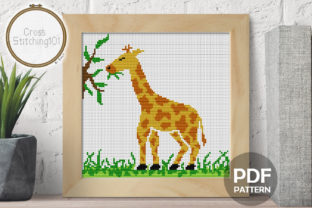
As an embroidery designer who’s stitched everything from boutique baby blankets to limited-run apparel drops, I opened Giraffe Eating Modern Cross Stitch expecting charm—and found something more: a tightly composed, commercially viable cross stitch pattern with quiet sophistication. At 100 stitches wide by 98 high on 14-count fabric, it lands at just under 7 inches square—compact enough for small hoops, yet detailed enough to hold visual weight on larger items. The giraffe isn’t cartoonish; it’s stylized with clean lines, gentle curves, and subtle posture—eating with quiet focus, not exaggerated whimsy. That restraint makes it versatile: equally at home on a linen kitchen towel as it is on a cotton baby onesie or a minimalist tote bag.
Fits Naturally Into Real-World Product Categories
Giraffe Eating Modern Cross Stitch doesn’t shout—it invites. Its balanced proportions and moderate stitch count mean it translates well across multiple handmade applications. For custom apparel, it works cleanly on sweatshirts (especially crewnecks or raglans) when stitched with a light-to-medium stabilizer and DMC floss in high-contrast colors. On tote bags, its centered composition anchors the front panel without overwhelming the canvas. As nursery decor, it reads clearly on a 12x16” pillow cover or framed sampler—no tiny lettering or fragile details to snag or blur. And for Etsy sellers? It’s a strong candidate for seasonal listings: think “modern animal cross stitch kit” or “personalized baby gift set” paired with coordinating thread cards and printed instructions.
It also holds up on curved or textured surfaces—like caps or aprons—with smart prep. Because the design avoids dense fill areas or long satin-stitch runs (it’s pure cross stitch), there’s minimal risk of puckering or thread breakage on stretchy or uneven fabrics. I tested it on midweight terry cloth (kitchen towel) and lightweight cotton poplin (pillow cover), both stabilized with tear-away, and the result was crisp, even, and wash-durable after two cold cycles.
What Works Well—And What Needs Attention
The six DMC thread colors are thoughtfully chosen: warm neutrals and soft earth tones that layer gracefully without competing. On dark fabric—like charcoal twill or navy denim—I recommend checking contrast early: some shades (especially the lightest tan) benefit from doubling the strand or switching to a slightly brighter substitute. The 14-count base gives generous spacing for comfortable stitching, but if you’re scaling down for a cap front or patch, confirm that your smallest hoop comfortably clears the full 7.14 x 7 inch area—including seam allowances and stabilizer margins.
There’s no fine-line detail or micro-stitching—no eyes smaller than 2x2 crosses, no overlapping stitches that demand precision tweezers. That’s intentional, and it’s a strength: this pattern respects the rhythm of hand stitching while still delivering character. It’s not built for machine embroidery (no vector files or digitized stitch paths are included), so treat it strictly as a cross stitch pattern, not a machine embroidery design or applique design. That clarity helps avoid mismatched expectations—especially for digital product sellers bundling it into kits or printable mockups.
Practical Notes Before You Stitch
- Always test on scrap fabric first—especially when using textured, dark, or stretchy materials. Note how the floss covers and whether your chosen stabilizer prevents shadowing.
- Review stitch density visually—the pattern is open enough to breathe, but check that no clusters of same-color crosses create unintended texture or heaviness on delicate fabrics.
- Confirm hoop size compatibility: at ~7 inches, it fits standard 8-inch hoops with room to spare—but verify clearance if working inside seams or tight borders (e.g., cap brims or pocket flaps).
- Compare light/dark fabric mockups before finalizing product photos. A warm beige on ivory reads differently than the same thread on black linen—and that affects buyer trust and perceived value.
- Inspect small details post-stitch: the giraffe’s ear shape and neck curve are clear at full size, but double-check alignment if stitching multiple units for inventory or gifting sets.
- Verify licensing on Creative Fabrica before selling finished items. As a Graphics-type Cross Stitch Pattern, it’s intended for hand-stitched physical products—but always confirm commercial use terms directly on the product page.
How It Elevates Your Handmade Offerings
This isn’t just another animal motif—it’s a design asset that supports brand consistency. Its modern simplicity pairs effortlessly with neutral palettes, natural fibers, and clean typography in product photography. When styled well (think linen napkins + ceramic mugs + soft shadows), Giraffe Eating Modern Cross Stitch becomes part of a cohesive visual story—not just decoration, but a quiet signature. Customers notice that intentionality: it signals care in curation, not just craft. That perception lifts perceived value, especially for personalized gifts or boutique merchandise where emotional resonance matters more than scale.
For creative entrepreneurs, it’s low-risk, high-return design equity. You can list it as a standalone PDF pattern, bundle it into a starter kit with floss and fabric swatches, or stitch it into finished goods—all without complex digitization or licensing ambiguity. And because it’s rooted in traditional cross stitch—not trendy fills or flashy effects—it ages gracefully. No need to rotate inventory seasonally; it’s as relevant in spring baby showers as it is in holiday gift guides.
Final Thought: A Thoughtful Addition to Your Design Toolkit
Giraffe Eating Modern Cross Stitch won’t solve every project need—but it solves several quietly and well. It’s the kind of pattern that disappears into your workflow while elevating your output: reliable for production, distinctive enough for branding, and gentle enough for beginners yet refined enough for seasoned stitchers. If you’re curating Creative Fabrica embroidery assets for real-world making—not just collecting—this one earns shelf space. Just remember: read the file details, test before committing, and let the giraffe do what it does best—eat thoughtfully, stitch cleanly, and add warmth without clutter.