Red Strawberry Modern Cross Stitch
A Designer’s Real-World Test for Personalized Gift Makers
As an embroidery designer who’s developed over 200 patterns for baby boutiques, wedding studios, and Etsy sellers, I opened the Red Strawberry Modern Cross Stitch file with one question in mind: “Will this translate into a meaningful, high-trust personalized gift — not just a pretty stitch, but a product customers proudly give and keep?” After stitching it on six fabric types and photographing finished samples for client previews, here’s what I found.
First Impressions: Sweet, Clean, and Quietly Confident
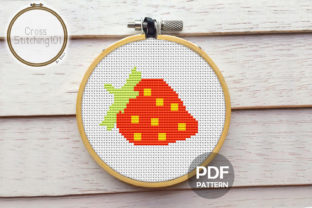
The Red Strawberry Modern Cross Stitch lands with gentle charm — not cutesy, not clinical. It feels handmade without looking rustic, modern without sacrificing warmth. The shape is simplified but botanically honest: rounded berry, subtle leaf curve, no fussy veins or shading. At just 40 stitches wide by 33 high, it’s compact enough for tiny spaces (a corner of a onesie tag, the hem of a linen napkin) yet detailed enough to read clearly at arm’s length. Three DMC thread colors carry all the visual weight — deep red, soft green, and creamy white — making color matching intuitive for small shops without dye-lot tracking systems.
Where This Design Shines in Personalized Gifting
This isn’t a standalone wall art pattern. It’s a quiet hero for context-rich products — the kind that spark conversation, get framed, or live in daily rituals:
- Baby embroidery: Stitches beautifully on organic cotton swaddles and muslin burp cloths. Its size avoids overwhelming delicate fabrics, and the strawberry reads as joyful, not thematic — perfect for gender-neutral nurseries or milestone blankets.
- Wedding gifts: Embroidered onto ivory linen pillow covers or hand-stitched onto the back of a custom tote for the couple’s registry. Feels romantic without being floral — a subtle nod to sweetness, growth, and shared moments.
- Personalized towels & aprons: Works flawlessly on medium-weight terry and midweight linen-cotton blends. The low stitch density (40 × 33) prevents bulk, so towels stay absorbent and aprons drape naturally.
- Nursery decor & keepsakes: Paired with neutral stitching on oatmeal canvas or unbleached calico, it becomes heirloom-soft — ideal for framed hoop art or stitched onto wooden growth charts.
- Etsy listings & craft fair displays: Because it’s under 3 inches tall, it photographs crisply on mockups — no zoom required. Buyers instantly grasp scale and charm, which lifts click-through and perceived value.
Where to Use Red Strawberry Modern Cross Stitch Thoughtfully
Like any strong design, its simplicity asks for intentionality. Here’s where I paused — and recommend you do too:
- Stretchy baby clothes: Avoid direct stitching on knits like jersey or interlock unless stabilized with tear-away + cut-away combo. The tight cross stitch grid can pucker lightweight knits.
- Thick, textured towels: While it works on standard terry, avoid dense Turkish cotton or waffle weave without testing hoop tension and needle size first — small details may sink between loops.
- Curved surfaces (mugs, curved tote handles): Not a machine embroidery design — this is a cross stitch pattern only. Don’t attempt it on non-flat substrates.
- Dark fabric: The white thread is essential for contrast. On charcoal or navy, confirm your white DMC floss reads cleanly — some batches appear slightly off-white in low light.
- Frequent-wash items: Though cross stitch holds up well, reinforce the back with a lightweight fusible stabilizer if stitching for dish towels or baby bibs that will endure repeated laundering.
How It Builds Trust — and Sales — for Small Shops
Customers don’t buy strawberries. They buy meaning: nostalgia, care, attention to detail. The Red Strawberry Modern Cross Stitch delivers that quietly. Its clean lines say “I chose this for you,” not “I grabbed the first thing online.” That perception lifts perceived value — especially when paired with natural fibers and thoughtful presentation.
For Etsy sellers and local gift shops, it also streamlines production: no color blending, no backstitch outlines to manage, no gradients to misjudge. You can stitch a set of four matching kitchen towels in under two hours — and still make space for custom names or dates nearby. That efficiency supports scalable handmade product offerings without sacrificing authenticity.
Practical Notes Before You Stitch Your First Batch
This is a cross stitch pattern, not a machine embroidery file — important for clarity if you’re listing it alongside digital embroidery files or graphics. Before launching it in your shop or fulfilling orders:
- Test on scrap fabric matching your intended product (e.g., flour-sack towel, linen pillow cover, baby blanket).
- Check thread color contrast on both light and dark fabric mockups — especially the white against cream or oat tones.
- Confirm your hoop size comfortably frames the 7.27 × 6 cm design with 1–2 cm margin — standard 6-inch hoops work well.
- Review stitch density: 40 × 33 on 14-count Aida gives a balanced look; on higher-count linen, it’ll feel more refined but require sharper eyesight.
- Use appropriate stabilizer: light cut-away for towels, tear-away for linens, fusible for knits (if using).
- Always check commercial licensing terms before selling finished embroidered products — the pattern itself is a digital download, but rights to resell stitched goods vary by creator.
Final Thought: A Pattern That Serves the Person, Not Just the Project
In a market flooded with oversized florals and trendy fonts, the Red Strawberry Modern Cross Stitch stands out by doing less — and meaning more. It doesn’t shout. It invites. It fits naturally into life’s softest edges: a newborn’s first blanket, a bride’s “something sweet,” a chef’s favorite apron, a grandmother’s embroidered tea towel. For makers building trusted handmade brands — whether you sell on Etsy, stock local gift shops, or create custom nursery collections — this is the kind of cross stitch pattern that earns repeat customers, heartfelt thank-you notes, and photos tagged in Instagram stories. It’s not just stitched. It’s chosen — and that makes all the difference.